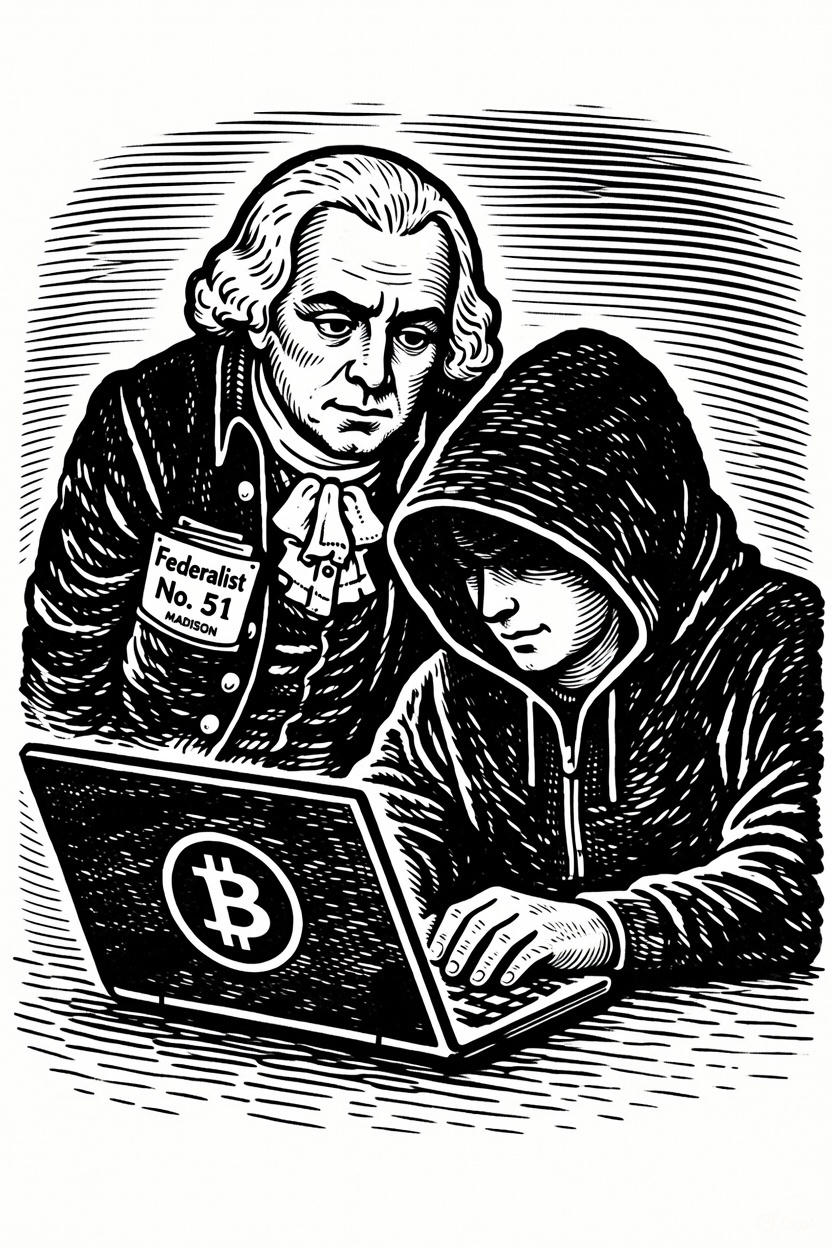
Madison meets Satoshi

Auxiliary Precautions in Code:
Blockchain Governance for Sovereign Wealth Funds

Madison meets Satoshi

Return to Main Page
Section 6.1.2 — Mechanism Analysis

Forensic Detectability

Blockchain analysis enables investigators to trace fund flows with certainty impossible in traditional finance. These cases demonstrate how Bitcoin's transparent ledger has become an indispensable tool for financial forensics.

"Where an excess of power prevails, property of no sort is duly respected. No man is safe in his opinions, his person, his faculties, or his possessions."
— James Madison, Essay on Property (1792)
$10B+
Recovered via blockchain tracing
100%
Transaction visibility
Forever
Evidence retention
Real-time
Movement monitoring

đź“‹ Landmark Cases

Exchange Theft → Recovery
Bitfinex Hack Investigation
The largest cryptocurrency seizure in DOJ history
Amount Stolen 119,754 BTC
Value at Seizure $3.6 Billion

What Happened

In August 2016, hackers breached Bitfinex exchange and stole 119,754 Bitcoin. For years, the funds sat largely unmoved—the thieves knew any movement would be tracked. When Ilya Lichtenstein and Heather Morgan finally began laundering small amounts through elaborate chains of transactions, blockchain analysts at Chainalysis followed every satoshi.

Blockchain Evidence Trail
Initial theft transaction (2016):
bc1qm34lsc65zpw79lxes...89fdex
View on mempool.space →
1 Theft identified: 2,072 transactions emptied Bitfinex wallets to attacker-controlled addresses
2 Dormancy period: Funds sat unmoved for years—every address was flagged and monitored
3 Laundering attempts: Small amounts moved through Alphabay market, gold purchases, Walmart gift cards
4 Identity link: One exchange deposit tied to a verified account in Lichtenstein's name
5 Seizure: DOJ recovered 94,636 BTC from a single wallet file on suspects' cloud storage
$3.6B Seized Both Pled Guilty February 2022 arrest; Lichtenstein sentenced to 5 years, Morgan to 18 months (2024)
Ransomware → Recovery
Colonial Pipeline Attack
Critical infrastructure ransomware and rapid fund recovery
Ransom Paid 75 BTC
Recovered 63.7 BTC

What Happened

In May 2021, DarkSide ransomware shut down Colonial Pipeline, causing fuel shortages across the U.S. East Coast. The company paid 75 BTC ($4.4M) in ransom. Within one month, the FBI traced and seized 63.7 BTC—demonstrating that even sophisticated criminal groups cannot hide on a transparent ledger.

Blockchain Evidence Trail
Ransom payment destination:
bc1q7eqww6dmm9l57pv4w...j0yqkj
1 Payment tracked: 75 BTC sent to DarkSide affiliate wallet on May 8, 2021
2 Rapid movement: Funds split across 23 addresses within hours
3 Consolidation: 63.7 BTC consolidated into a single address (affiliate's "take")
4 Seizure: FBI obtained private key (method undisclosed) and seized funds June 7
85% Recovered 30 days from payment to seizure; DarkSide shut down operations shortly after
Exchange Fraud → Exposure
QuadrigaCX Ponzi Scheme
Blockchain analysis proved a dead CEO was running a fraud
Customer Losses ~$190M CAD
Duration 2013-2018

What Happened

When QuadrigaCX CEO Gerald Cotten died in December 2018, the Canadian exchange claimed $190M in customer funds were locked in cold wallets only he could access. Blockchain forensics told a different story: the "cold wallets" were empty. Cotten had been trading customer funds on other exchanges, losing them, and paying withdrawals with new deposits—a classic Ponzi scheme revealed only through on-chain analysis.

Blockchain Evidence Trail
1 Cold wallet audit: Claimed cold storage addresses contained only 0 BTC at time of death
2 Personal trading: Cotten's addresses showed trades on Poloniex, Bitfinex, Kraken using customer funds
3 Loss pattern: On-chain records showed consistent trading losses over 5 years
4 Ponzi mechanics: Withdrawal payments traced to deposit addresses—new money paying old claims
Fraud Proven Ontario Securities Commission report (2020) confirmed Ponzi structure via blockchain analysis
Dark Market → Conviction
Silk Road Investigation
The case that proved Bitcoin is traceable
Seized 174,000 BTC
Conviction Life in prison

What Happened

Ross Ulbricht operated Silk Road believing Bitcoin provided anonymity. FBI agents traced server payments and marketplace commissions directly to his personal wallets. The investigation pioneered blockchain forensics techniques now standard in law enforcement worldwide.

Blockchain Evidence Trail
1 Commission tracking: Every Silk Road sale generated traceable commission to admin wallets
2 Server payments: VPN and hosting paid in Bitcoin traced to same wallet cluster
3 Personal spending: Ulbricht's purchases linked on-chain to marketplace proceeds
Life Sentence $1B+ Seized (2020) Additional 69,370 BTC seized in 2020 from Silk Road hacker, traced via same methods

🔬 Forensic Techniques

đź”—

Cluster Analysis

Grouping addresses that appear in the same transaction or exhibit common spending patterns to identify wallet ownership.

🏷️

Address Attribution

Linking addresses to known entities (exchanges, services, individuals) through deposit/withdrawal records and public disclosures.

🌊

Flow Tracking

Following funds through multiple hops, including mixers and chain-hopping services, using probabilistic taint analysis.

⏱️

Temporal Analysis

Correlating transaction timing with external events, user activity patterns, and timezone indicators.

🏦 Traditional Finance Investigation

  • Requires subpoenas for each institution
  • Records may be incomplete or destroyed
  • Cross-border requests take months/years
  • Relies on institutional cooperation
  • Paper trail can be falsified
  • 1MDB: 8+ years to trace $4.5B

₿ Blockchain Investigation

  • All transactions publicly visible
  • Records permanent and complete
  • Instant global access to full history
  • No cooperation required to trace
  • Cryptographically verified accuracy
  • Bitfinex: Full trail in hours

Through Madison's Lens

Madison understood that accountability requires transparency. In Federalist No. 51, he argued that the structure of government must provide "auxiliary precautions" beyond mere virtue—mechanisms that make misconduct discoverable and punishable.

Bitcoin's transparent ledger is precisely such a mechanism. Unlike traditional financial systems where investigators must request records from institutions that may be complicit, compromised, or simply uncooperative, blockchain analysis requires nothing from the suspect. The evidence exists independently of anyone's willingness to provide it.

For sovereign wealth funds, this property is transformative. A government official who diverts funds through traditional banking channels might succeed for years while investigators navigate bureaucratic obstacles. The same official attempting to divert Bitcoin would create a permanent, public, cryptographically verified record of their misconduct—discoverable by any citizen with an internet connection.

This is deterrence through transparency: the certainty that misconduct will be visible forever.